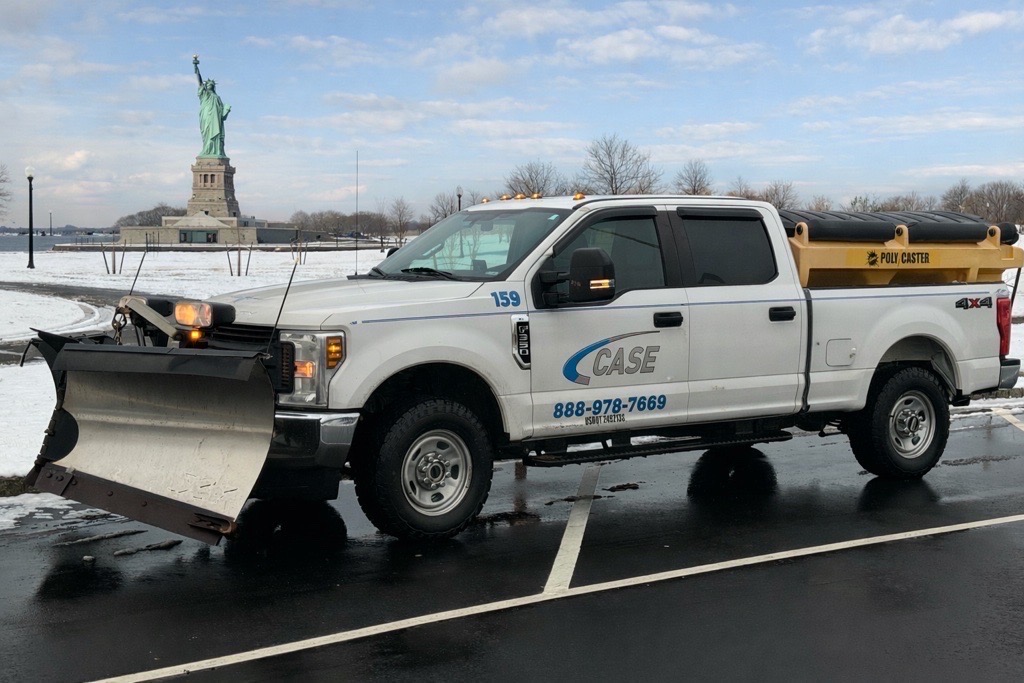

As a commercial property owner or manager, you need a reliable snow management partner to ensure safety, reduce liability, and maintain business operations.
At Case, we are proud to be a trusted source for dependable snow removal services on a national scale. Our network of vetted service partners provides consistent service delivery, and our proprietary technology facilitates real-time updates and proactive communication.
We provide a wide range of snow and ice management services to keep your properties accessible, safe, and compliant with local regulations during snow events.
Our experts use professional-grade equipment to efficiently plow bulky snow, clearing large areas like parking lots, access roads, and driveways.
We specialize in commercial de-icing and salting services to prevent ice buildup and provide traction on high-traffic areas. Our teams use various materials, including salt, to stop ice formation after snow removal.
Our walkway and sidewalk clearing services help maintain safety and accessibility for employees, clients, and visitors. We use specialized equipment, such as snow blowers and sidewalk plows.
We offer snow hauling and relocation, moving large amounts of excess snow to off-site locations. This service is crucial for reducing slip-and-fall risks and keeping access points clear.
Since 2009, Case has provided reliable, high-quality commercial snow removal and landscaping services. Choose us for:
Case partners with an extensive network of service providers to deliver commercial snow management solutions to various properties, such as:

Here are answers to a few common questions about commercial snow removal services.
Commercial snow removal costs vary widely depending on property size, location, removal method, equipment, and other factors.
Snow plowing involves pushing snow to the sides of a surface to clear it for use, while snow removal is the additional process of hauling that displaced snow away from the property.
To budget for snow removal services, you can:
Are you ready to start planning your winter property maintenance services? Trust Case FMS to handle your snow and ice management needs. From parking lot plowing to snow hauling, we do it all. Contact us today for a free quote and site assessment.
Winter weather is an operational challenge, not just a weather event. For commercial property portfolios, retail networks, healthcare facilities, industrial campuses, and multi-site organizations, snow and ice create real risks: inaccessible parking, blocked entries, unsafe pedestrian routes, disrupted deliveries, and operational downtime.
Case provides comprehensive commercial snow and ice management for businesses that cannot afford winter to interrupt operations. From snow clearing and plowing to ice control, sidewalk management, snow relocation, and hauling, we coordinate the full winter-service lifecycle across your property or portfolio.
Most commercial properties require more than a plow truck showing up after a storm.
A parking lot may be cleared while sidewalks remain blocked. Ice may develop hours after snow is removed. Snow piles may begin consuming usable parking spaces within days of a major storm. Pedestrian routes may go unaddressed entirely. Commercial snow and ice management is a coordinated operation. It covers:
When managed correctly, winter does not have to disrupt operations, restrict access, or create safety concerns. When managed poorly, a single storm event can create problems that persist for days.
Case approaches commercial snow and ice management as a property operations responsibility, not a reactive service call.
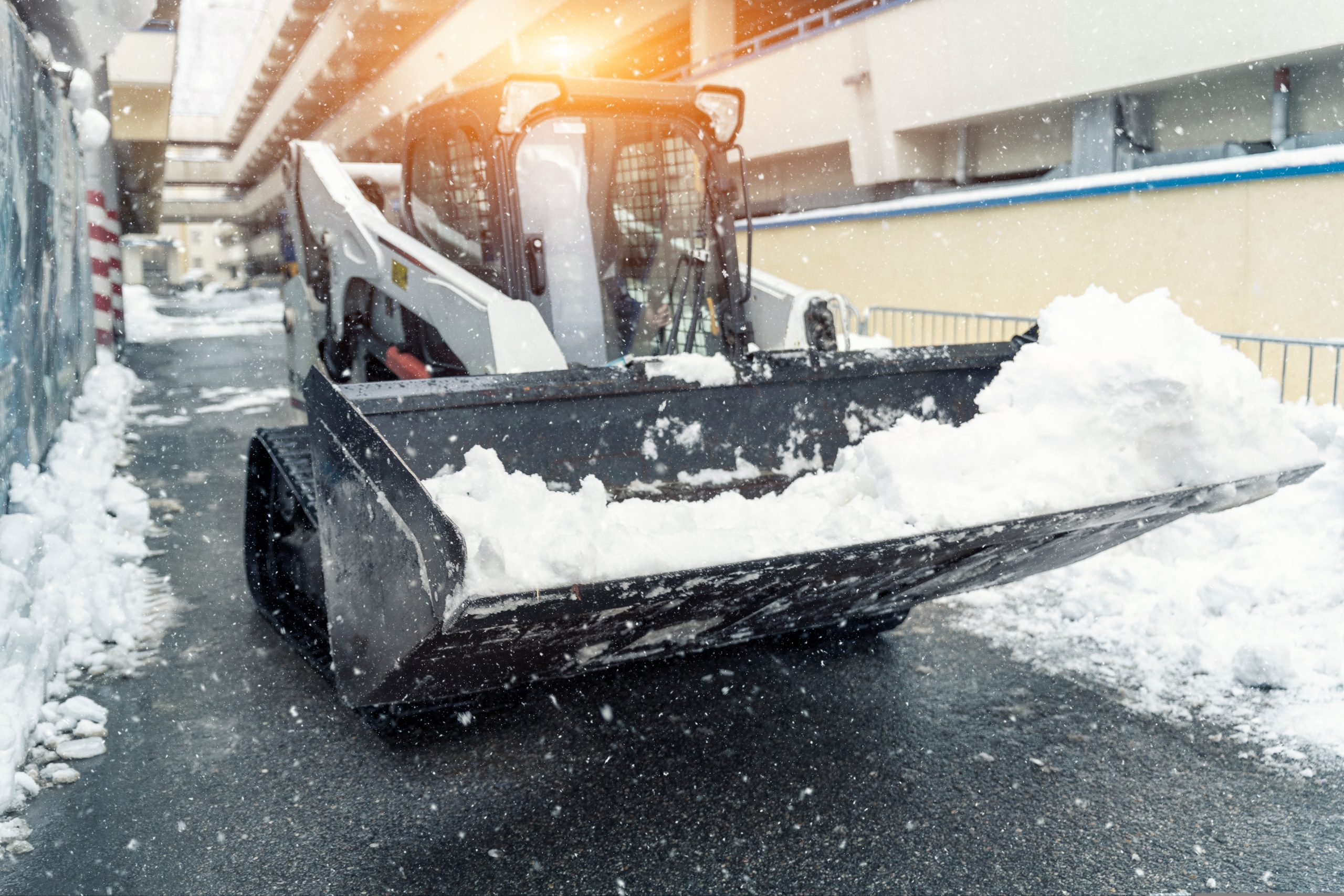
Removing accumulated snow from parking lots, drive lanes, access roads, and other designated commercial areas. Snow clearing is typically the first priority following a storm event, restoring vehicle movement across the property.
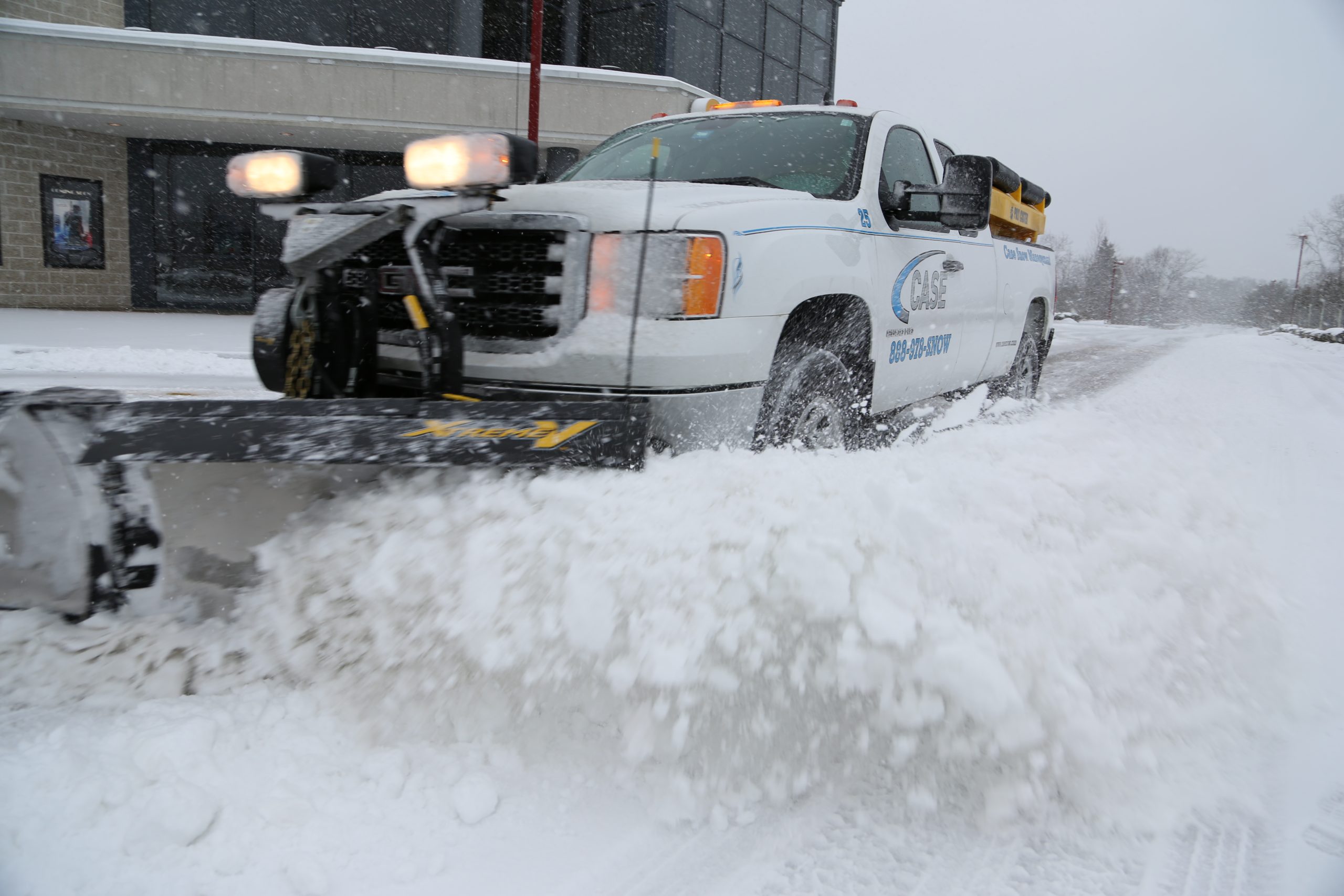
Plowing moves accumulated snow from primary traffic surfaces, parking areas, drive lanes, and vehicle-access routes, to designated storage locations on the property. Commercial plowing operations are structured around your property’s layout, traffic flow, and access priorities.
Ice presents a different challenge than snow. It forms after snowfall, after freeze-thaw cycles, and in areas where water collects and refreezes. Commercial ice melting targets surface ice accumulation using appropriate materials and application methods for the conditions.

Salt and sand application improves surface traction on parking areas, drive lanes, and pedestrian routes. Salting is commonly applied before and after storm events to reduce ice formation and improve surface safety.
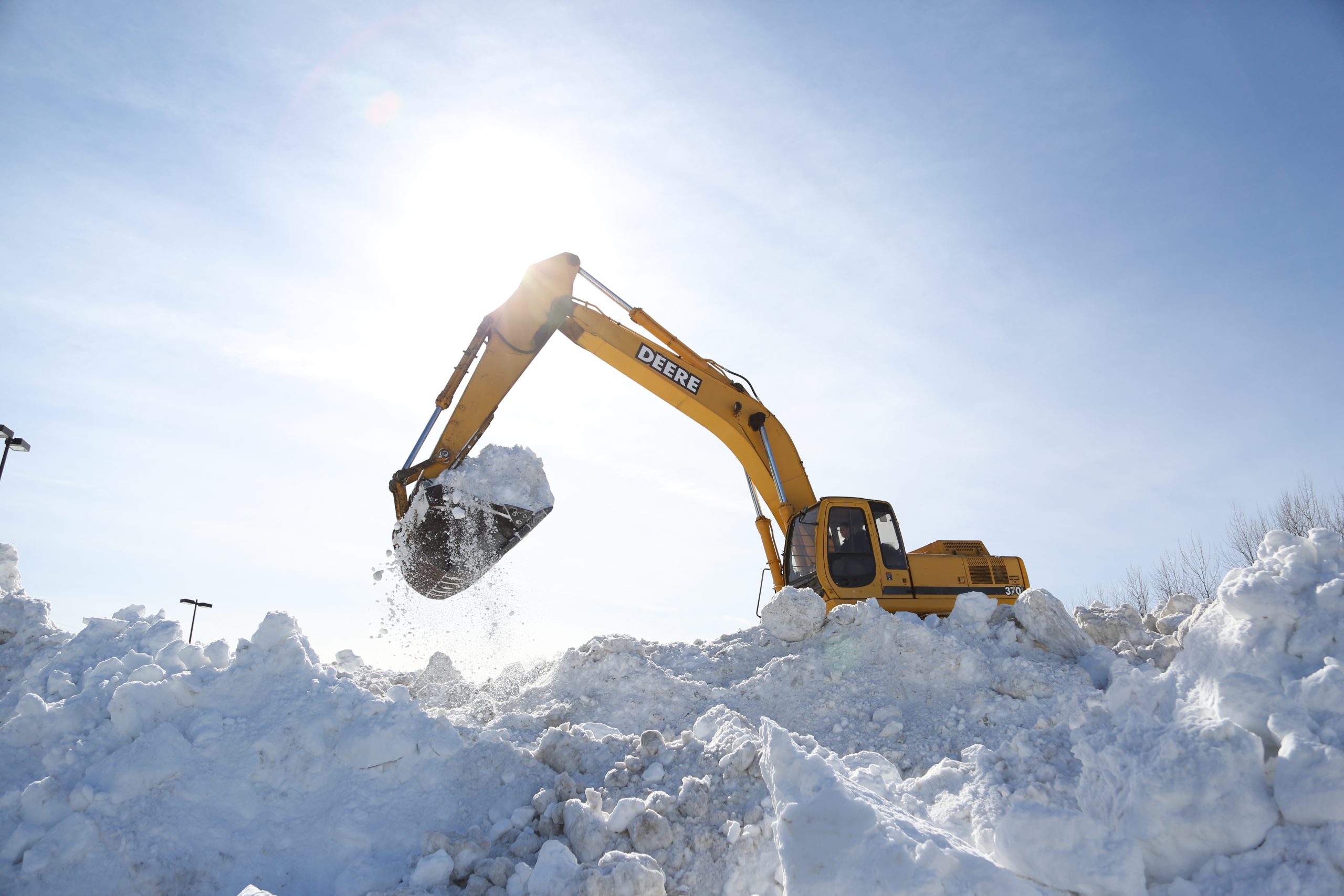
After consecutive storm events, snow piles accumulate and begin consuming parking spaces, blocking access routes, and reducing property usability. Snow relocation moves accumulated snow to designated areas on the property, recovering parking capacity and restoring access.
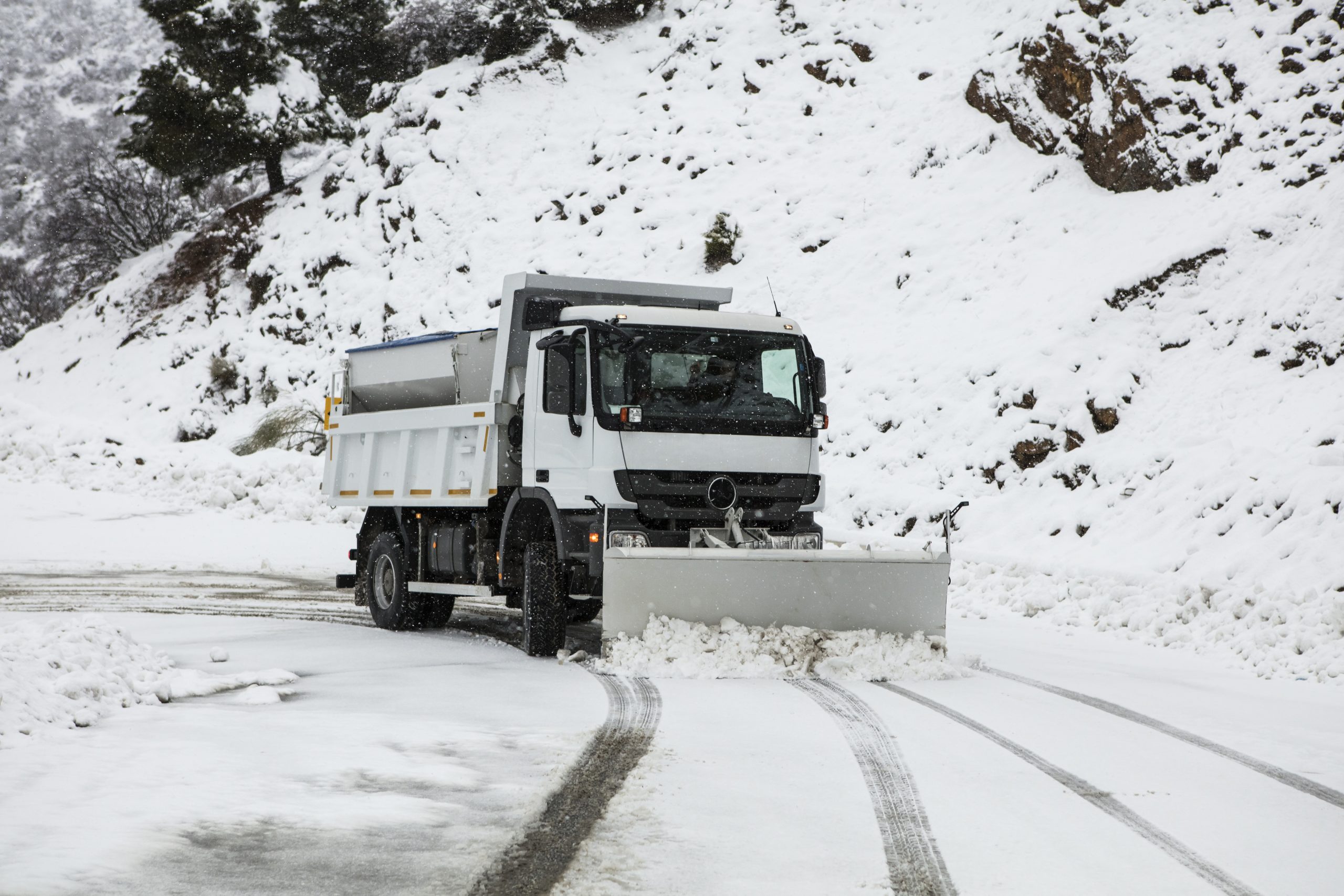
When on-site snow storage is insufficient, snow must leave the property entirely. Snow hauling involves loading and transporting accumulated snow off-site to an appropriate disposal location. This is typically required following major storm events or when extended winter weather has exhausted available storage.

Cleared parking areas are not enough if pedestrian routes remain blocked. Sidewalk clearing addresses walkways, building entrances, pedestrian paths, ramps, and other foot-traffic areas, keeping people moving safely from parking to entry.
Commercial snow and ice management is structured for organizations where property accessibility is tied directly to operations, occupancy, and safety.
Retail chains, healthcare networks, hospitality groups, corporate campus operators, and property management companies managing multiple locations require consistent winter operations across every site, not just the ones closest to the contractor’s depot.
Office parks, industrial facilities, distribution centers, warehousing networks, and institutional properties with large surface areas require coordinated equipment deployment, priority routing, and reliable multi-pass operations during extended events.
Hospitals, medical office buildings, and outpatient facilities require year-round access. Pedestrian routes, ambulance access, and parking areas cannot be left unaddressed during or after a storm.
Customer-facing properties cannot operate effectively with inaccessible parking, blocked entrances, or unsafe walkways. Retail chains and hospitality operators managing high-traffic properties have low tolerance for winter service failures.
Warehousing, distribution, and manufacturing facilities depend on clear loading areas, truck lanes, and employee parking throughout winter. Delayed access at these properties has direct operational and supply-chain consequences.
Property managers responsible for commercial portfolios need a single snow-management partner capable of coordinating service across multiple properties, with consistent standards, centralized communication, and reliable service documentation.
Different winter conditions create different operational problems. The right service depends on what the property actually needs.
| Situation | Service |
|---|---|
| Snow has accumulated across parking and access areas | Snow Clearing |
| Vehicle routes and drive lanes need to be cleared | Snow Plowing |
| Ice is forming on parking surfaces or walkways | Ice Melting |
| Surface traction needs to be improved | Salting & Sanding |
| Snow piles are consuming parking spaces | Snow Relocation |
| There is no remaining on-site snow storage | Hauling |
| Sidewalks and entrances remain blocked after plowing | Sidewalk Snow Clearing |
| The entire winter operation needs to be managed | Commercial Snow & Ice Management |
Case structures commercial snow and ice operations around a coordinated service sequence, not individual one-off requests.
01
Understand the property’s layout, surface types, priority access routes, pedestrian areas, loading zones, and winter-management requirements before the season begins.
02
Determine service scope, equipment requirements, priority areas, service triggers, and snow-storage locations. For multi-site portfolios, this includes site-specific planning for each location.
03
Remove snow from designated areas following storm events, starting with priority access routes and extending to secondary areas based on the agreed service plan.
04
Address ice formation and surface traction using appropriate materials and methods for current conditions.
05
When snow storage areas begin affecting parking capacity or property access, move accumulated snow to designated relocation areas.
06
When on-site storage is exhausted, transport snow off the property to appropriate disposal locations.
07
Continue monitoring and servicing the property as conditions change throughout winter events, not just during initial snow accumulation.
For organizations managing 40, 75, or 100+ commercial locations, winter operations are a portfolio-level coordination problem.
A contractor capable of servicing one retail location may not have the equipment, staffing, or geographic coverage to manage a regional portfolio to consistent standards. Coordinating multiple local contractors across dozens of properties adds complexity, inconsistency, and communication overhead that most facility teams would rather avoid.
Case supports multi-site winter-management programs, providing:
Multi-site organizations that consolidate winter operations with a single capable provider typically find winter management easier to coordinate, more consistent in execution, and more straightforward to evaluate at contract review.
Snow and ice management is fundamentally about keeping a property usable and its occupants safe.
Unmanaged snow and ice on pedestrian routes, building entrances, and parking areas creates hazardous conditions for employees, customers, visitors, and tenants. Sidewalk clearing and ice treatment are not secondary considerations, they are core components of a complete winter-management program.
Parking lots, drive lanes, delivery access roads, and loading areas need to remain usable throughout winter events. Disrupted vehicle access affects employee attendance, customer visits, deliveries, and operational logistics.
For most commercial properties, closure or restricted access during winter weather is not an acceptable outcome. Proactive snow and ice management helps organizations maintain normal operations when conditions are difficult.
Property owners and operators have an ongoing responsibility to maintain safe, accessible conditions on commercial properties. Professional snow and ice management, with defined service scope, clear accountability, and appropriate service documentation, helps organizations address winter-related safety requirements as part of a structured facility management program.
Note: The specific risk and liability implications of commercial snow management depend on the applicable contract, jurisdiction, and circumstances. Case can discuss service scope and documentation as part of the proposal process.
Case provides commercial exterior facility maintenance to property owners, facility managers, and property management companies operating across Massachusetts and the broader New England region.
Winter is one season. Case supports commercial property maintenance across the full year.
Season | Service |
Year-round | Commercial Landscaping |
Spring–Fall | Irrigation |
Growing Season | Lawn Care & Weed Control |
Year-round | Tree & Shrub Care |
Year-round | Pest Control |
Winter | Commercial Snow & Ice Management |
Organizations managing large commercial portfolios benefit from working with a single facility partner capable of coordinating all exterior maintenance needs, reducing vendor complexity, improving service consistency, and simplifying communication across the year.
Commercial snow and ice management is a structured approach to maintaining safe, accessible, and operational commercial properties during snow and ice events. It typically includes snow clearing and plowing, ice treatment, salting and sanding, sidewalk clearing, snow relocation, and hauling, coordinated as part of a seasonal property-management program rather than delivered as individual, reactive services.
Commercial snow management can include snow clearing, snow plowing, ice melting, salting and sanding, sidewalk clearing, snow relocation, and snow hauling. The appropriate combination of services depends on the property type, surface areas, occupancy requirements, and winter conditions.
Snow clearing typically refers to the removal of accumulated snow from a surface using appropriate equipment. Snow plowing specifically involves using a plow blade to push snow from traffic surfaces, parking lots, drive lanes, to designated storage areas on the property. In practice, both are part of the same winter-removal process; the distinction matters when scoping exactly which surfaces and methods are included in a commercial contract.
Sidewalk clearing is a distinct service that addresses pedestrian routes, building entrances, walkways, and ramps. It should be specified explicitly in the service scope, as parking lot plowing does not automatically include sidewalk and pedestrian-area clearing.
Ice is typically addressed through ice melting, salting, and sanding. Ice treatment is applied to parking surfaces, drive lanes, walkways, and entrances, depending on where ice is forming and what conditions are present. Pre-treatment (before a storm) and post-treatment (after snow removal) are both part of commercial ice-management programs.
Salt is applied to treated surfaces to inhibit ice formation and break down existing ice. Sand is used to improve traction on icy surfaces without melting. Both are commonly applied to commercial parking areas, drive lanes, and pedestrian routes during and after winter events.
Snow relocation becomes necessary when accumulated snow piles begin reducing parking capacity, blocking access routes, or creating operational problems on the property. After several consecutive storm events, snow storage areas fill up and the snow must be moved to other on-site locations to recover usable space.
Snow hauling involves loading accumulated snow onto trucks and transporting it off the property to an approved disposal location. Hauling is required when there is no viable on-site storage remaining and accumulated snow is affecting property operations.
Yes. Case provides winter-management programs for multi-site commercial portfolios. For organizations managing multiple commercial locations, Case can coordinate service across sites under a single program with consistent service standards and centralized communication.
Commercial properties benefit from completing a pre-season review that identifies priority service areas, designates snow-storage locations, confirms equipment access points, and aligns service scope and expectations with the snow-management provider before winter conditions arrive. Addressing this before the first storm prevents avoidable problems during active weather events.
Key evaluation points include: defined service scope (what surfaces are included), response capability during major events, equipment capacity relative to the property size, ice-management services, sidewalk and pedestrian-route coverage, service documentation, insurance, and the ability to manage multiple locations if applicable.
Use the contact form or CTA on this page to submit a winter-management inquiry. We will gather information about your property or portfolio, discuss your winter-service requirements, and provide a commercial snow and ice management proposal.
Winter weather is predictable. How your property handles it does not have to be.
Case works with commercial property owners, facility managers, property management companies, and multi-site organizations to plan and manage winter operations before conditions arrive, not after.
356 John L Dietsch Blvd.
North Attleboro, MA 02763
888.978.7669
Interested in learning about the latest industry insights? Subscribe to our quarterly newsletter below. And we promise … it’s only quarterly. We never spam.